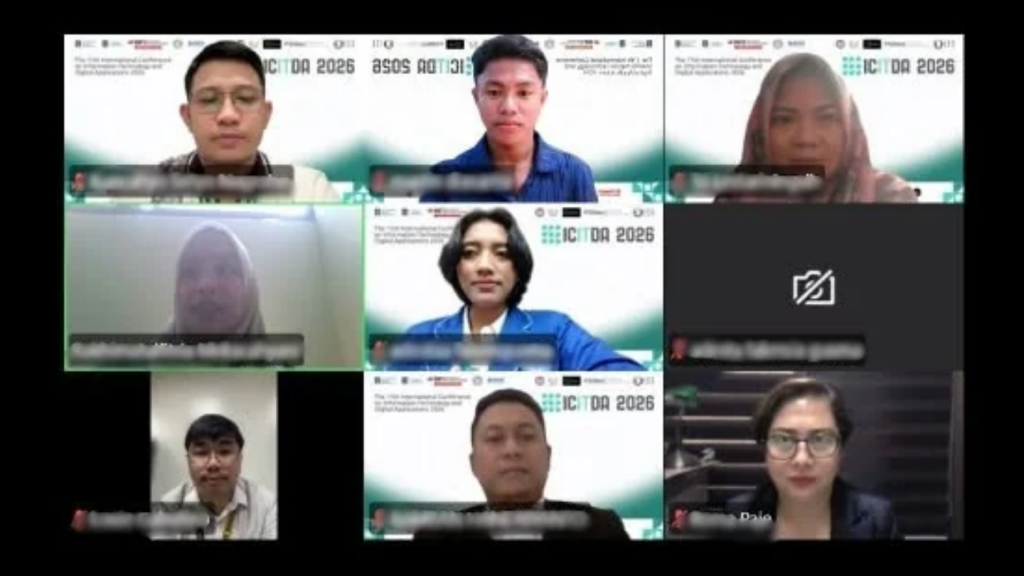
Two research papers by students of the College of Computer Studies were accepted and presented virtually at the 11th International Conference on Information Technology and Digital Applications (ICITDA 2026), held on November 9–10, 2026 in Lombok, Indonesia.
Both studies were produced by fourth-year Bachelor of Science in Information Systems students under the mentorship of Deputy Director for Scientific Publication El Jireh Bibangco.
The student researchers are Martin Diasanta, Kheishia Faith Mationg, Angela Oñate, Alex, Villafuerte, and Ron Gabriel Baylon, with Deputy Director Bibangco as co-author in both papers. Diasanta and Mationg presented the two papers.
Screenshots by CCS / RDS
They are part of the University’s work to build up its Research Center for AI, Data Science, and Analytics, said Bibangco.
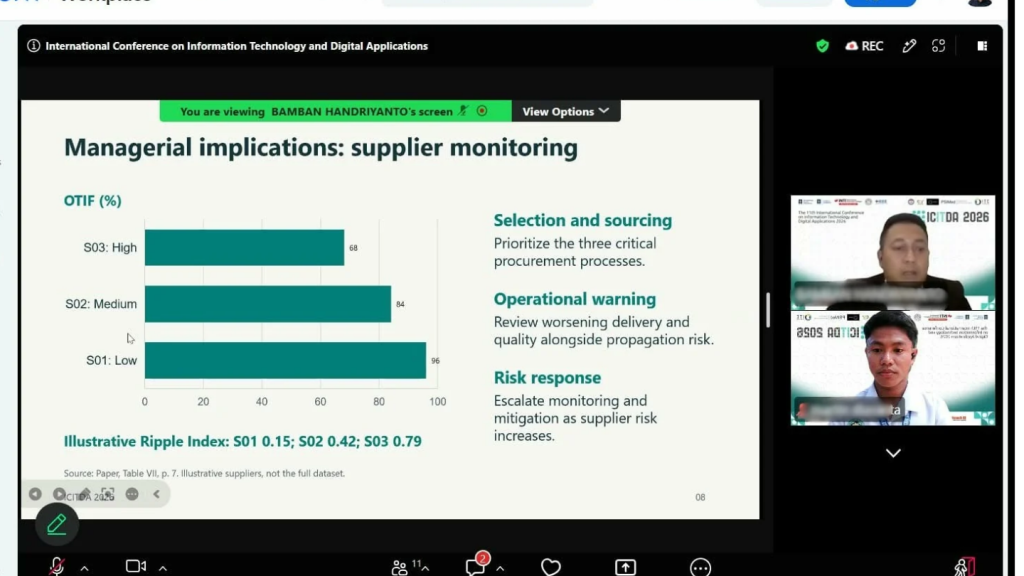
Diasanta presented the study “Forecasting Monthly Temperature Change in the ASEAN Region: A Data-Driven Framework for Climate Risk Preparedness and Regional Adaptation.”
The study analyzed monthly temperature anomalies from 1961 to 2023 across the ten ASEAN member states and compared five forecasting approaches: Seasonal Naïve, Holt-Winters, SARIMA, Prophet, and XGBoost.
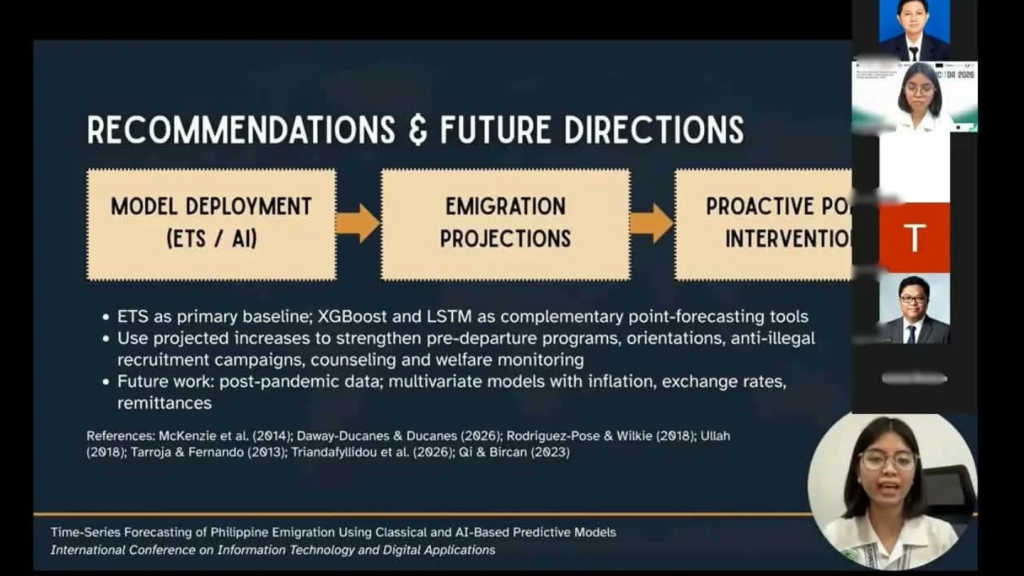
Meanwhile, Mationg presented the study, “Time-Series Forecasting of Philippine Emigration Using Classical and AI-Based Predictive Models.” It was co-authored by with Oñate, Villafuerte, and Baylon.
It used annual emigration data from 1988 to 2019, the study compared ARIMA, Exponential Smoothing State Space (ETS), Prophet, XGBoost, and LSTM models.
The papers were published in the conference proceedings, which are indexed in Scopus. The conference drew 118 paper submissions, of which 52 were accepted, an acceptance rate of 44.1 percent, with participants from eight countries.
CCS Dean Joe Marie Dormido, PCPE, DIT, noted that both papers align with the conference’s focus on information technology, data science, and digital applications, and reflect the University’s commitment to research with regional and societal impact, particularly in climate risk preparedness and migration policy planning.
Presenting at the conference gave CHMSU students an international academic audience and showed that student research from the University can pass international peer review and be presented alongside work from other institutions.